Saturday, June 4, 2022

Surnames from German

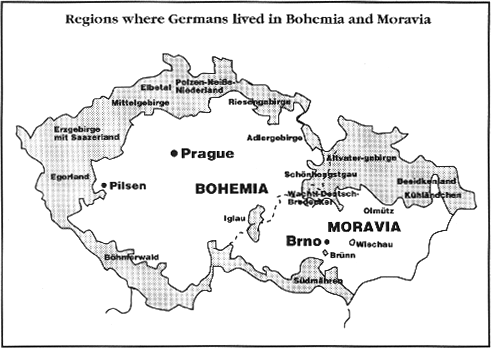
Czech lands are a place where many different language elements meet - there si Czech language, but there were parts where German was the most common language till the half of the 20th century. How did this happen?

As you most probably know, one third of the Czech lands inhabitants were Germans till the second half of 1940s. This was caused by the large medieval colonisation when owners of Czech estates invited people from quite overcrowded Bavaria and other German speaking regions to come and settle in almost uninhabited regions of Bohemia, Moravia and Silesia. As these people were living in quite secluded areas (such as mountain valleys) they kept their language and spoke German.
Wednesday, April 13, 2022

Grooms and brides from Dobrš parish

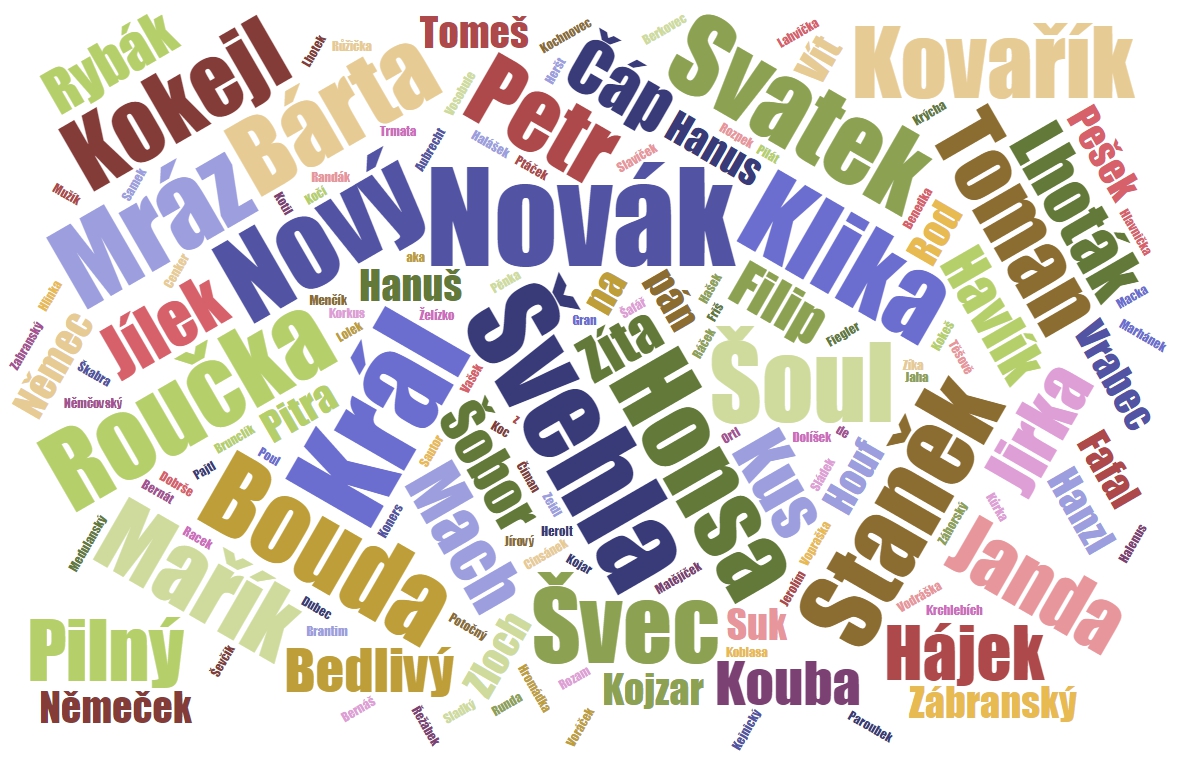
When I was researching my own family I processed all the records from the marriage book of Dobrš parish between 1702 and 1784. Thanks to that I got a long list of grooms and brides - and I decided to do a word map (or a word cloud) for both male and female surnames out of it to see what were the most common grooms' and brides' surnames in this parish in 18th century.

And I decided to provide these word maps also to you - maybe your ancestors were from this area and you'll find some not-so-usual surnames you know...


Do you like our posts? Consider becoming our patron on Patreon and support us by regular monthly contribution. We offer three tiers with different advantages. See more on Patreon: https://www.patreon.com/czechgenealogy

Thursday, April 7, 2022

Death Survey Cards

You have most probably seen such notes in the parish books - cause of death and then a number of a death survey card.

Cause of death: Na sešlost věkem dle úmrtního lístku dto 3. června 1873 Nr. 11
(Senility according to the death survey card from June 3, 1873, no. 11.

Saturday, April 2, 2022

Septuagesima Sunday

One of the church "dates" which you can see in the marriage books quite often is the Septuagesima Sunday (neděle devítník in Czech). It's often mentioned as one of the days when marriage bans took place. Marriage bans took place on three feast days prior to the marriage - and the feast day was usually a Sunday.

Pre-Easter period

Thursday, March 31, 2022

Technical: Blog comments

Dear readers, due to the huge amount of spam comments lately I'm forced to manage all the comments and approve those which are connected to the topic of Czech genealogy - and delete those which are just spam.

If you post a comment please wait for its moderation and don't repost it. I usually check the comments every day, so it should take maximum of 24 hours before your comment appears on the blog. 

Thanks for your understanding.

Wednesday, March 30, 2022

I starý tkadlec občas splete přízi

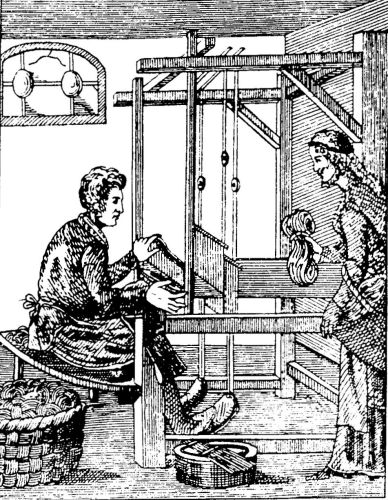
It's almost impossible to translate the sentence in the headline. It says "Even the old weaver sometimes weaves a yarn" - but it could be also translated as "Even the old weaver sometimes makes a mistake when weaving" as the word "splete" means both "weaves" and "makes a mistate". And you most probably already know what this post is about - weavers.

Tuesday, March 22, 2022

Surname changes shown on one surname

March poll about surnames on Patreon was won by an option to show surname changes on one surname. I have chosen surname Švejda which provides number of different possibilities how to write it.

Surname Švejda is said to have two possible different origins - it could come from the word Švéd which means Swede or Swedish, or it could originate from a personal characteristic - švejda meant someone who was big and/or clumsy.

There are different ways how to write this surname which is caused by the different ways how to write down letters as explained in one of the older blog posts. Here is an overview of those changes:

  • Š to SCH or SS
  • V to W
  • J to Y, G or I